
The historic house
A New York house.Closed in 1889.
Robert Carter opened a bookshop in New York on 1 April 1834. The firm that grew from it became one of the century’s leading religious publishers. It was not a denominational organ. Presbyterian conviction sat at the centre of the list; the list itself ran well beyond it.
Earlston → Canal Street
A teacher buys a bookseller’s stock.
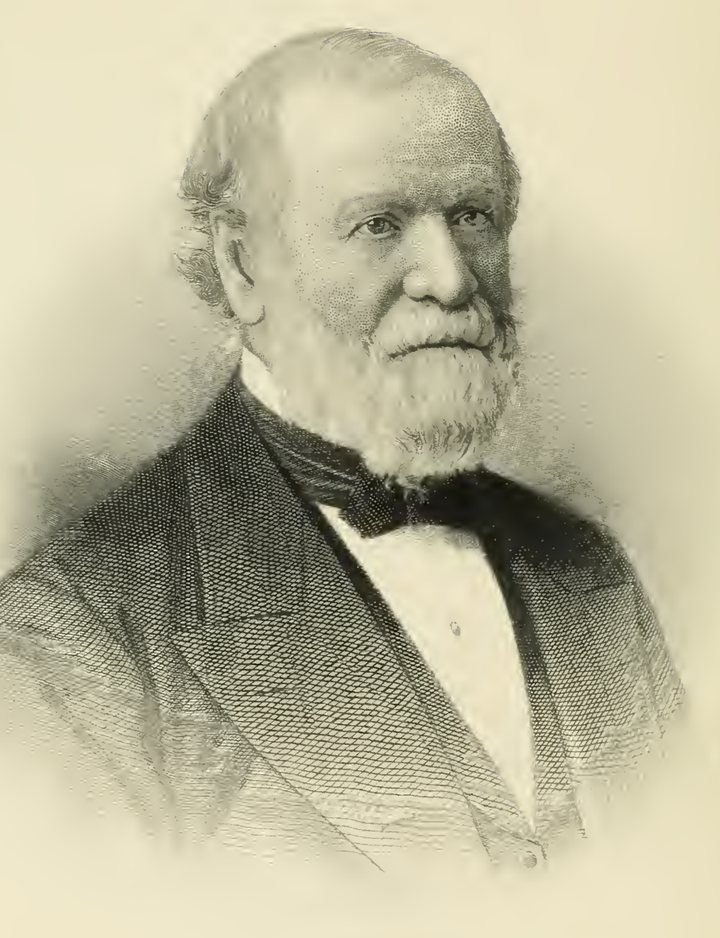
Robert Carter was born at Earlston, in Berwickshire, in November 1807. He taught in Scotland, spent a session at the University of Edinburgh, and landed in New York on 16 May 1831.
He taught classics in the city and worshipped at the Scotch Presbyterian Church. On 18 March 1834 he married Jane Thomson. He had saved six hundred dollars. With that sum he bought the stock of an insolvent bookseller on Cortlandt Street, and on 1 April he opened a shop at the corner of Canal and Laurens Streets. His daughter records that the first book he sold was a Bible.
He soon moved to a larger store at the corner of Canal and Mercer Streets, and there he began to publish. In 1836 James Lenox sent him William Symington’s treatise on the atonement and took a hundred copies for students at Princeton Seminary. New York booksellers told Carter the book was too dry for Americans. The first edition sold, and fifteen hundred more were printed and sold. A. D. F. Randolph, speaking to the American Bible Society on 2 January 1890, remembered that first imprint as a treatise on the atonement, and called it the keystone of the list Carter afterwards built.
What the house published
Strong doctrine.
A wider catalogue.
The early list, as Carter himself described it, carried Scottish and British theology into the American trade: Symington, Merle d’Aubigné’s history of the Reformation, Thomas Chalmers on Romans, Horne’s Introduction to the Scriptures, Matthew Henry’s commentary, Turretin in Latin, and Poole’s Annotations. Later letters and tributes add the sermons of C. H. Spurgeon, books by John R. Macduff, and the works of James McCosh, who said it was through Carter that his books were introduced in America.
That theological shelf was the centre, not the boundary. Annie Carter Cochran writes that Episcopal names on the list were as numerous as Presbyterian ones, and that Baptists, Methodists, Congregationalists, and Quakers were represented, with Unitarian and Roman Catholic names among them. Carter’s rule, as she states it, was that he would not publish what he could not accept as true and useful, and that he rarely issued a book he had not read. A specialist bibliography of the firm’s books for young readers counts more than seventy series or libraries, among them the Cabinet Library and the Fireside Library, with writers including A. L. O. E., Susan and Anna Warner, and Julia and Joanna Mathews.
I am glad that Robert Carter and Brothers are not only publishers of my sermons, but also true and generous friends, with whose conduct I am more than satisfied. – C. H. Spurgeon
The family firm
Three brothers.
One imprint.
In 1848 Robert took his two youngest brothers, Walter and Peter, into partnership, and the business became Robert Carter & Brothers. Appletons’ Cyclopædia records that Peter entered a book-store in 1840 and became a partner in November 1848. Cochran places the removal to 285 Broadway in 1848, and says the brothers remained there eight years. A later account of the firm’s addresses dates that move to 1849. This page does not choose between those two years.
In 1856 the store left 285 Broadway. Cochran writes that the landlord had taken light and frontage from the shop, that Carter refused to sue, and that he bought a building on the corner of Broadway and Spring Street. The address was 530 Broadway. It stayed on the title pages for the rest of the firm’s life.
A concise chronology
Eight dates,
then a closed house.
- 1807
Earlston
Robert Carter is born at Earlston, in Berwickshire, in November 1807, the son of a weaver.
- 1831
New York
He lands on 16 May, teaches classics, and attaches himself to the Scotch Presbyterian Church.
- 1834
Canal Street
On 1 April, with six hundred dollars and an insolvent bookseller’s stock, he opens at the corner of Canal and Laurens Streets.
- 1836
The atonement
James Lenox urges him to publish William Symington on the atonement. The book finds readers, and the shop becomes a publishing house.
- 1848
The brothers
Walter and Peter Carter enter the partnership. The move to 285 Broadway is dated 1848 by Cochran and 1849 in a later list of addresses.
- 1856
530 Broadway
Carter buys a building at Broadway and Spring Street. 530 Broadway becomes the address on the title pages.
- 1889
The close
Robert Carter dies on 28 December. The house is out of business by the end of the year.
- 1890
The plates
The stock and printing plates are sold at auction.
1889, and after
The house closed.
The name was revived.
Robert Carter died on the morning of Saturday, 28 December 1889, and was buried on 31 December from the Scotch Presbyterian Church. The firm was out of business by the end of that year. Its stock and printing plates were sold at auction in 1890.
Some books still carry an 1890 date, and one preface is dated 1893. Neither is treated here as another year of the house. There was no unbroken successor after the sale. The present Robert Carter & Brothers is an independent revival of the name, not a legal continuation of the New York firm, and it has not yet published a book.
The revived house works from a historical Presbyterian centre, in the Reformed theological field, with room for Christian thought beyond that shelf. That is a choice about new editions. It is not a rewriting of the nineteenth-century catalogue, which was broader than a Presbyterian and Reformed list.
The revived house ↗Sources
The record behind the story.
The narrative follows Cochran unless another source is named. Cochran gives the birth as 2 November 1807. Auld Earlston prints a parish-register wording of 27 November 1807 (https://auldearlston.blogspot.com/2017/07/robert-carter-1807-1889-earlston-born.html), so the day is left open. Cochran dates the move to 285 Broadway in 1848; the juvenile-series address list dates it 1849. Spurgeon’s sentence is quoted from a letter printed by Cochran. The death on 28 December 1889 is the Saturday morning named in the funeral address, before the burial on 31 December. The 1890 auction is the account in the juvenile-series bibliography. Books dated 1890, and one preface dated 1893, are noted so that no single later year is treated as the firm’s last year.